
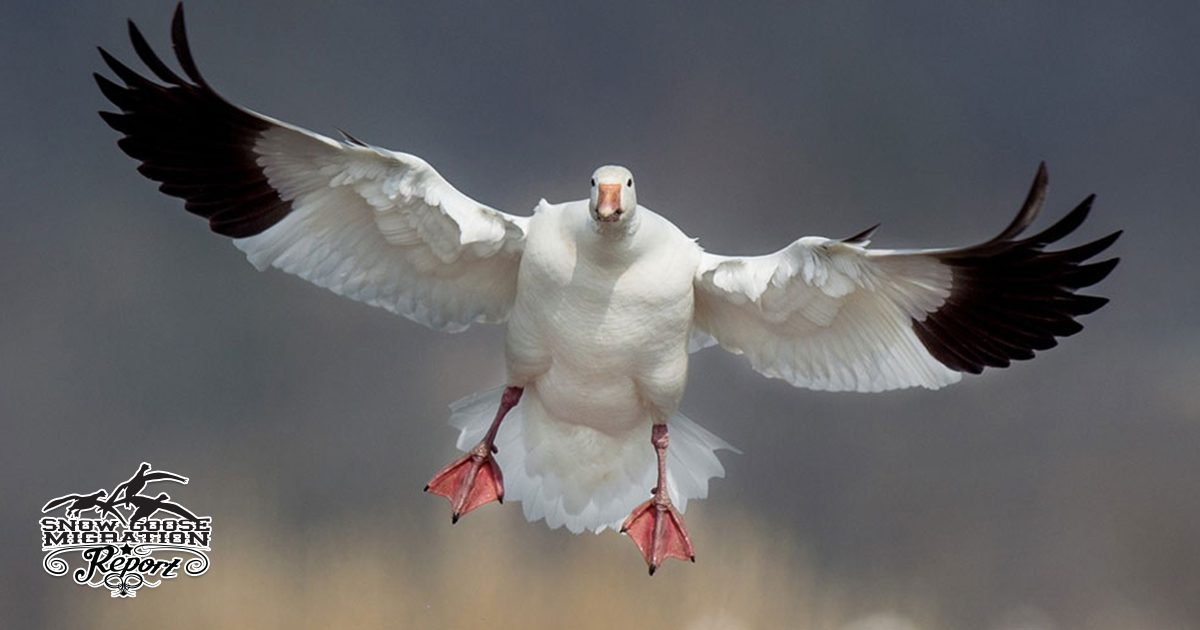

Snow Goose migration follows well-defined aerial highways called flyways. These bird corridors are essential for understanding where and when flocks move, which helps hunters, outfitters, guides, and wildlife photographers plan the season with more precision.
In this article, we break down the Central Flyway and the Mississippi Flyway, explain how they differ, and provide practical takeaways for field success. You’ll also find helpful Snow Goose Migration Report resources for outfitters/guides, gear vendors, featured gear, sponsors, and photographers/videographers.
What Are Flyways and Why They Matter
A flyway is a broad corridor of migration that birds use year after year. Snow Geese travel these routes as they move between wintering areas and northern breeding grounds. Understanding flyways—timing, weather triggers, and staging patterns—helps you forecast movement, scout smarter, and plan travel more efficiently.
Central Flyway: Key Characteristics
The Central Flyway generally runs north from the Gulf region through the Great Plains, commonly affecting:
- Texas
- Oklahoma
- Kansas
- Nebraska
- South Dakota & North Dakota
- Prairie Canada
Why the Central Flyway Can Be Highly Productive
- Fast, high-volume pushes: Major fronts and strong winds can trigger sudden, dense migration waves.
- Big staging events: When weather stalls birds, large concentrations can form and hold for days or weeks.
- Agriculture-driven feeding: Waste grain in corn, wheat, and bean fields often concentrates birds and creates repeatable patterns.
Mississippi Flyway: Key Characteristics
The Mississippi Flyway tracks north through the central U.S. and often includes movement through:
- Arkansas
- Missouri
- Illinois
- Iowa
- Minnesota
What Makes the Mississippi Flyway Different
- More phased movement: Migration can be more “step-by-step” with longer staging intervals.
- Weather sensitivity: Gradual temperature shifts and changing snow cover can influence stop duration and direction.
- Distributed staging: Birds may spread across fields, wetlands, and refuge-adjacent areas—changing daily patterns and scouting needs.
Central vs Mississippi: Practical Comparison
While every year is different, these general tendencies are useful for planning:
| Factor | Central Flyway | Mississippi Flyway |
|---|---|---|
| Movement style | Often faster, big push days | Often more phased and gradual |
| Staging | Can stack in large concentrations | Can be more distributed |
| Hunt windows | Can be intense but compressed | Can provide a wider window |
| Scouting approach | Rapid response, track new arrivals | Broader scouting, pattern shifts |
For outfitters and guides, this often means building flexibility into schedules and maintaining multiple options as birds shift with weather and food availability.
Outfitters & guides: If you provide guided hunts or are looking to connect with established services, use the directory here:
Snow Goose Hunting Outfitters & Guides
How Photographers & Videographers Can Use Flyway Insights
Flyway knowledge helps visual creators time trips for peak activity:
- Central Flyway: Great for dramatic “push days,” massive flocks, and high-energy takeoffs.
- Mississippi Flyway: Often supports longer staging opportunities for feeding, landing sequences, and consistent flight lines.
Explore and connect with creators here:
Snow Goose Photographers & Videographers
Season Planning: Typical Flyway Timing Patterns
Timing varies year to year, but this general progression is useful for planning travel, scouting, and content calendars:
- Late winter (Jan–Feb): Early movement begins out of southern wintering areas.
- Mid-February: Central Flyway often accelerates with major staging and push days.
- Late February–early March: Mississippi Flyway often builds with wider distribution across fields and wetlands.
- March: Peak overlap and the most consistent movement in many years.
- April: Birds transition north toward breeding areas as conditions open up.
Gear & Equipment That Helps Across Both Flyways
Whether you are guiding hunts, running your own spread, or documenting migration, having dependable gear matters when conditions change quickly.
Find gear vendors and stores here:
Snow Goose Hunting Gear Vendors & Stores
See the latest featured equipment here:
Latest & Featured Snow Goose Hunting Gear and Equipment
- Decoy systems sized for your typical staging density and field layout
- Effective calling setups (including e-callers where legal and appropriate)
- Cold-weather and wet-weather layering systems
- Optics/camera support for distance scouting and long-session shooting
Sponsors & Industry Partnerships
If you operate a business serving hunters, guides, and wildlife enthusiasts, sponsorship can help you reach a targeted, highly engaged audience.
Learn more here:
Snow Goose Migration Report Sponsors
Final Thoughts
Flyways are more than lines on a map—they are practical forecasting tools. By understanding the unique rhythm of the Central and Mississippi Flyways, you can scout smarter, plan travel better, and capitalize on peak opportunities for hunting and media capture throughout the season.